Luxor is one of the best places to visit in Egypt for travelers who want to experience ancient history. Located on the banks of the Nile River, Luxor is home to magnificent temples, royal tombs, ancient statues, and fascinating archaeological sites. Often called the world’s greatest open-air museum, Luxor offers an incredible journey through thousands of years of Egyptian history.
What makes Luxor, Egypt special is the number of ancient monuments found in and around the city. The Nile divides Luxor into two main areas: the East Bank and the West Bank. The East Bank was the center of religious and public life, while the West Bank was mainly used for royal tombs and funerary temples. Visiting both sides gives you a better understanding of ancient Egyptian civilization.
Explore Karnak Temple on Luxor’s East Bank
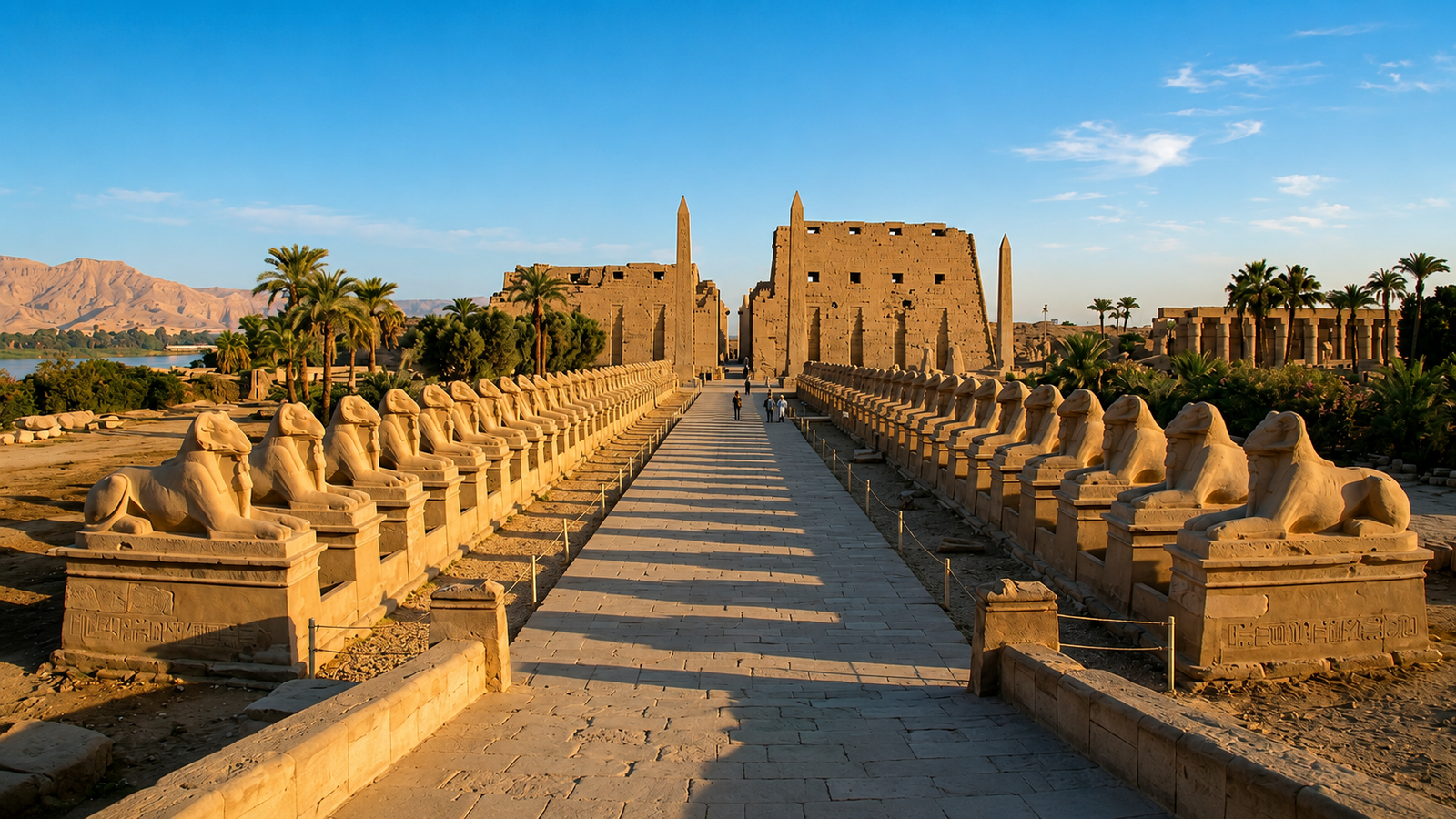
One of the most impressive places to visit in Luxor is the Karnak Temple Complex. It is one of the largest religious complexes ever built and was developed by many ancient Egyptian rulers over centuries.
The complex features huge columns, obelisks, statues, courtyards, and walls covered with hieroglyphs. The Great Hypostyle Hall is one of its most impressive areas, with massive stone columns rising above visitors.
Walking through Karnak Temple gives you a clear idea of the scale and ambition of ancient Egyptian architecture.
Visit Luxor Temple
Located close to the Nile, Luxor Temple is another important attraction on the East Bank. The temple was connected to ancient religious festivals and royal ceremonies.
Its massive entrance, statues, columns, and ancient reliefs make it a fascinating place to explore. Visiting Luxor Temple in the evening can be especially enjoyable because the illuminated monument creates a beautiful atmosphere.
Discover the Valley of the Kings
Cross the Nile to the West Bank and you will find one of Luxor’s most famous attractions: the Valley of the Kings.
This ancient necropolis contains the tombs of many pharaohs. Inside the tombs, visitors can see colorful paintings, hieroglyphs, and scenes connected with ancient Egyptian beliefs about the afterlife.
The Valley of the Kings is an essential stop for anyone interested in ancient Egyptian history.
See the Tomb of Tutankhamun
The Valley of the Kings is also famous for the tomb of Tutankhamun. The discovery of his tomb in 1922 became one of the most famous archaeological discoveries in the world.
Although Tutankhamun ruled Egypt for a relatively short time, the treasures found in his tomb made his name internationally famous. Visiting his tomb adds another fascinating chapter to a trip through Luxor.
Visit the Temple of Queen Hatshepsut
Another highlight of Luxor’s West Bank is the Temple of Queen Hatshepsut at Deir el-Bahari.
The temple was built against dramatic limestone cliffs and features large terraces, columns, and detailed reliefs. It was dedicated to Queen Hatshepsut, one of ancient Egypt’s most important female rulers.
The combination of architecture and natural scenery makes the temple one of the most impressive sites in Luxor.
Discover Medinet Habu and Deir el-Medina
Luxor offers more than its most famous monuments. Travelers who have extra time can explore Medinet Habu, the impressive mortuary temple of Ramses III.
The temple is known for its large walls and well-preserved reliefs. These decorations provide valuable information about ancient Egyptian history, religion, and military events.
Nearby, Deir el-Medina offers a different perspective. This ancient village was home to the craftsmen who worked on the royal tombs in the Valley of the Kings. Exploring the site provides an insight into the daily lives of the people who built and decorated the tombs.
See the Colossi of Memnon
The Colossi of Memnon are two enormous stone statues located on the West Bank.
The statues once stood in front of a large mortuary temple and have survived for thousands of years. Today, they are one of the most recognizable landmarks in Luxor and a popular stop during West Bank tours.
They also provide excellent opportunities for photographs.
Experience the Nile in Luxor
Luxor is not only about temples and tombs. The Nile River is an important part of the city’s atmosphere.
A traditional felucca ride allows visitors to enjoy the river while viewing palm trees, farmland, desert landscapes, and nearby monuments. A sunset felucca ride is particularly relaxing and offers beautiful views of the Nile Valley.
Take a Hot Air Balloon Ride Over Luxor
For a different view of the city, consider taking a Luxor hot air balloon ride at sunrise.
From above, you can see the Nile Valley, green farmland, villages, desert mountains, temples, and archaeological sites. Watching the sunrise over the West Bank creates a memorable experience and provides a unique perspective of ancient Luxor.
Why Luxor Is Perfect for History Lovers
Luxor stands out because its history is not limited to a museum. Ancient monuments are spread across the landscape, allowing visitors to experience history in its original setting.
You can explore temples on the East Bank in the morning, visit royal tombs on the West Bank, and finish the day beside the Nile. Each location reveals another part of ancient Egyptian civilization.
Best Time to Visit Luxor
The best time to visit Luxor is generally from October to April, when temperatures are more comfortable for sightseeing.
Because many attractions are outdoors, it is important to prepare for the Egyptian sun. Comfortable walking shoes, lightweight clothing, sunscreen, sunglasses, and a hat are useful during your visit.
Starting sightseeing early in the day can also help you avoid the strongest afternoon heat.
How Many Days Do You Need in Luxor?
For the main attractions, two days in Luxor can provide a good introduction to the city. One day can focus on the West Bank, while another can cover Karnak Temple, Luxor Temple, and other East Bank attractions.
If you have more time, consider adding Medinet Habu, Deir el-Medina, Luxor’s museums, a felucca ride, or a hot air balloon experience.
Final Thoughts
Luxor truly deserves its reputation as Egypt’s greatest open-air museum. From the enormous temples of Karnak and Luxor to the royal tombs of the Valley of the Kings, the city is filled with remarkable monuments.
Exploring Luxor allows you to walk through ancient temples, discover beautifully decorated tombs, sail along the Nile, and experience landscapes that have remained connected to Egyptian history for thousands of years.
If you want to experience the heart of ancient Egypt, Luxor should be at the top of your Egypt travel itinerary.